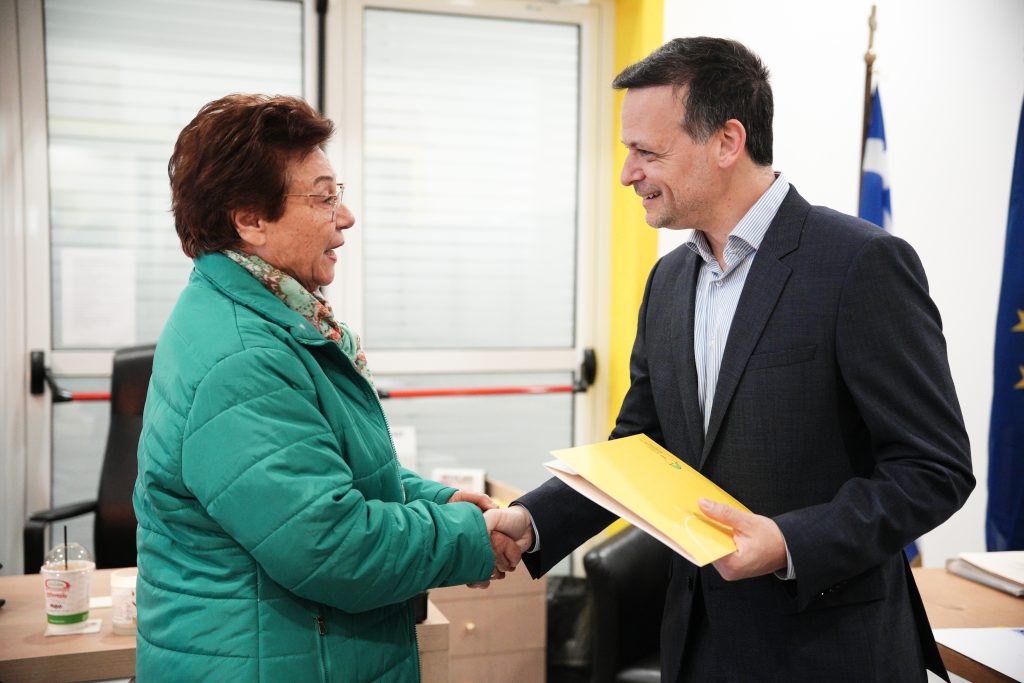
The Mayor of Athens, Haris Doukas, met at the Energy Poverty Alleviation Office (EPAO) with the first 25 beneficiaries from energy-poor households in Athens, who have been exempted from municipal fees, following a decision by the City Council. In a symbolic gesture, he handed them their official certificates, reaffirming the municipal authority’s commitment to supporting vulnerable citizens.
In his statement, Mayor Haris Doukas underlined:
“We are putting Energy Democracy into practice. The exemption from municipal fees is a historic decision that takes into account the energy crisis and its impact on vulnerable households in our city. From the very beginning, the City of Athens took initiatives to address this phenomenon by establishing the Energy Poverty Alleviation Office, which operates under Develop Athens. Through the Office, household energy assessments continue and tailored solutions are provided to support them.”
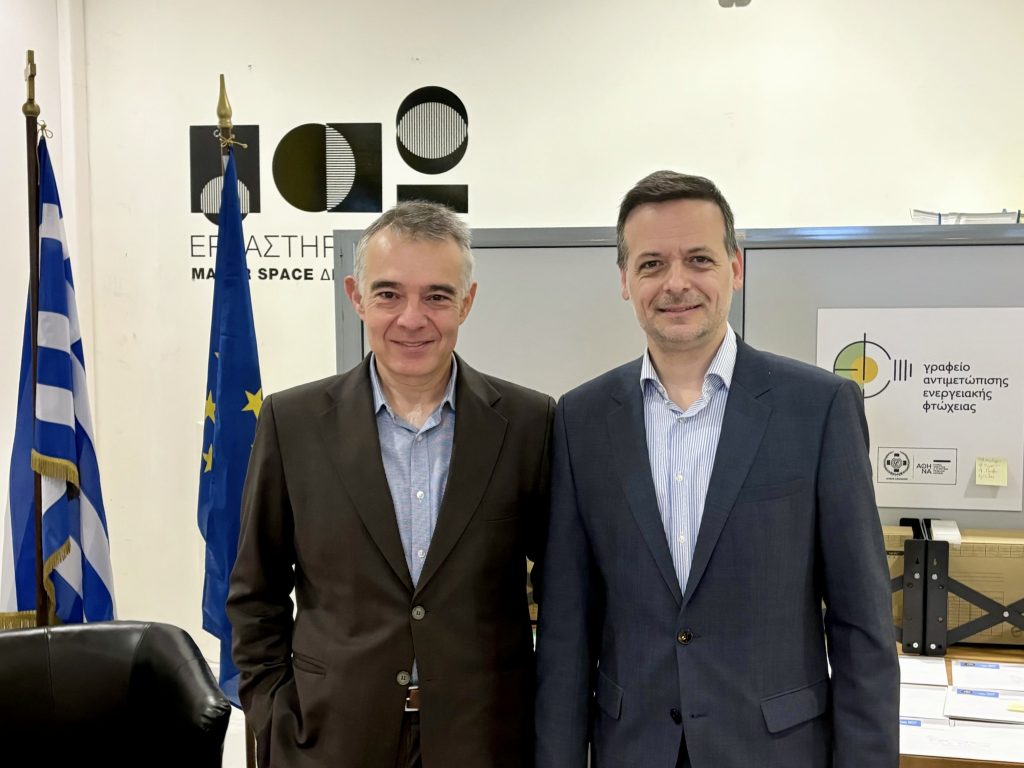
On his part, the CEO of Develop Athens S.A., Ioannis Georgizas, noted:
“The Energy Poverty Alleviation Office evaluates energy-vulnerable households in Athens on a daily basis and facilitates the procedures for exemption from municipal fees. According to the data available so far, 18% of households approaching the Office meet the criteria for municipal fee exemptions and we estimate that this percentage will increase in the coming months, following relevant checks.”
This decision, adopted last December by the Athens City Council, constitutes a landmark initiative at European level. Under this decision, Athenian households that meet all the criteria of the National Energy and Climate Plan (NECP – revised in 2024) as “energy poor” are exempted from municipal lighting and sanitation fees.
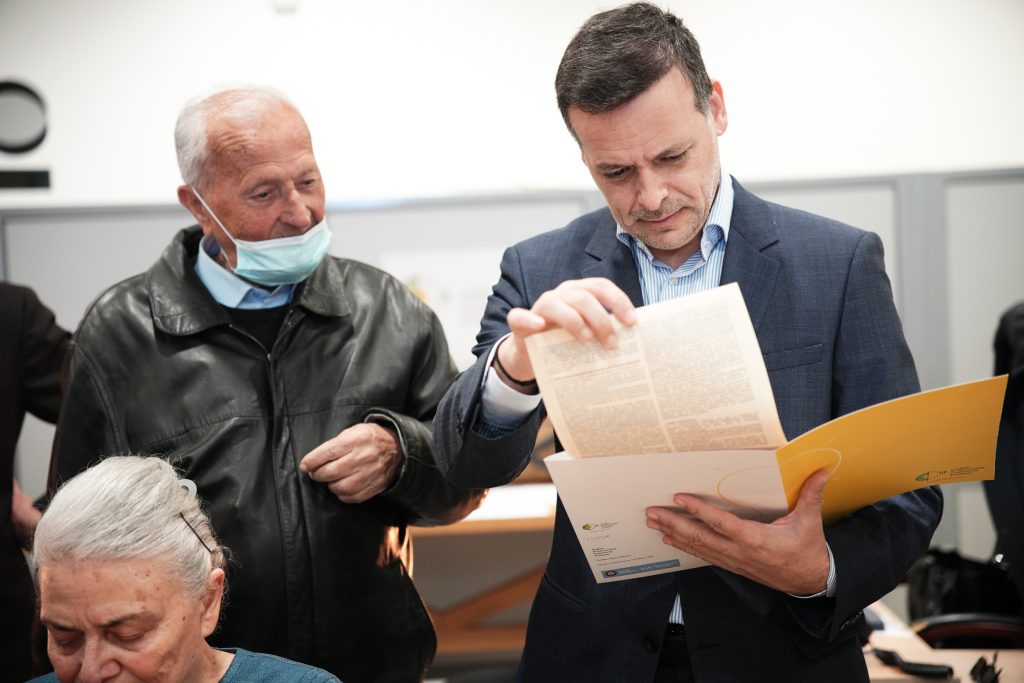
Main eligibility criteria
To qualify for the exemption, two main criteria must be met:
1. Energy consumption
The first criterion, based on the NECP and the City Council decision, concerns the annual energy consumption of each household, measured in kilowatt-hours (kWh). This must not exceed 80% of the annual energy consumption required to cover the minimum necessary energy needs, as determined by the Energy Performance Certificate (EPC) of the property. The EPC, which must accompany every property, is an indicator of its energy efficiency and specifies the annual energy consumption associated with the building.
It is noted that the annual energy consumption in kWh is calculated based on all electricity, heating oil or natural gas bills and is documented through the submission of invoices, along with the property’s Energy Performance Certificate. In particular, Develop Athens offers, through its engineers, free data collection and issuance of Energy Performance Certificates to potential beneficiaries.
2. Financial criteria
The second criterion concerns the net annual income of the energy-vulnerable household. This is calculated based on the OECD equivalence scale for defining relative poverty, taking into account the number of household members and their income. In Greece, the poverty threshold (60% of median equivalized income) amounts to €6,927 per person per year. Each household’s net annual income is documented through the submission of the E1 tax form.
For applications and further information, interested parties may contact the Energy Poverty Alleviation Office via the four-digit number 1595 (charges apply depending on the provider) or by email at: gaef@developathens.gr