

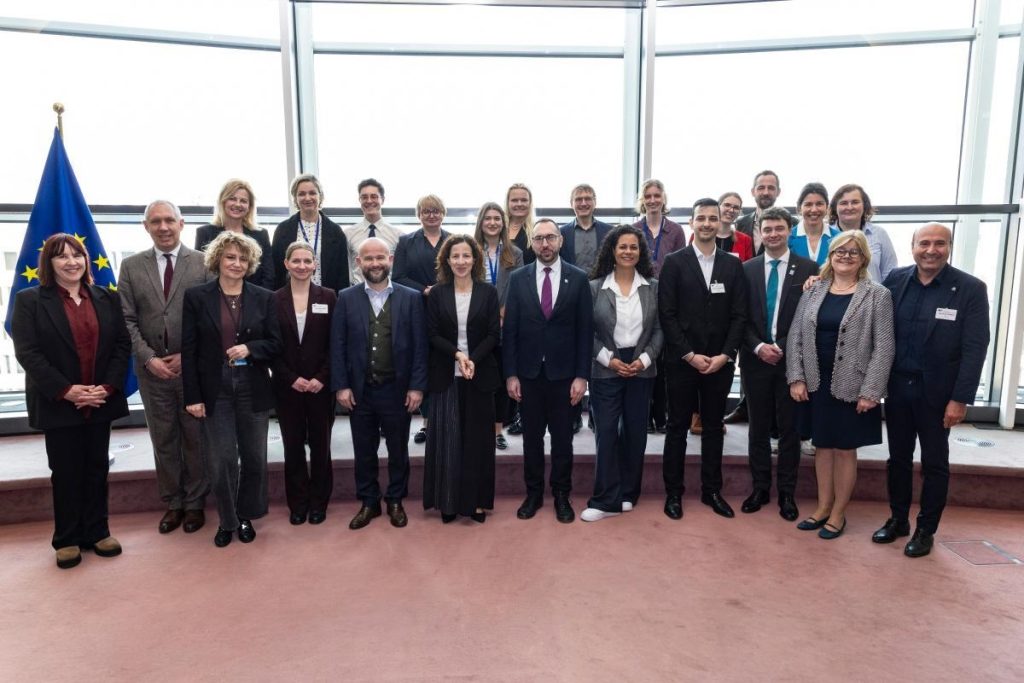
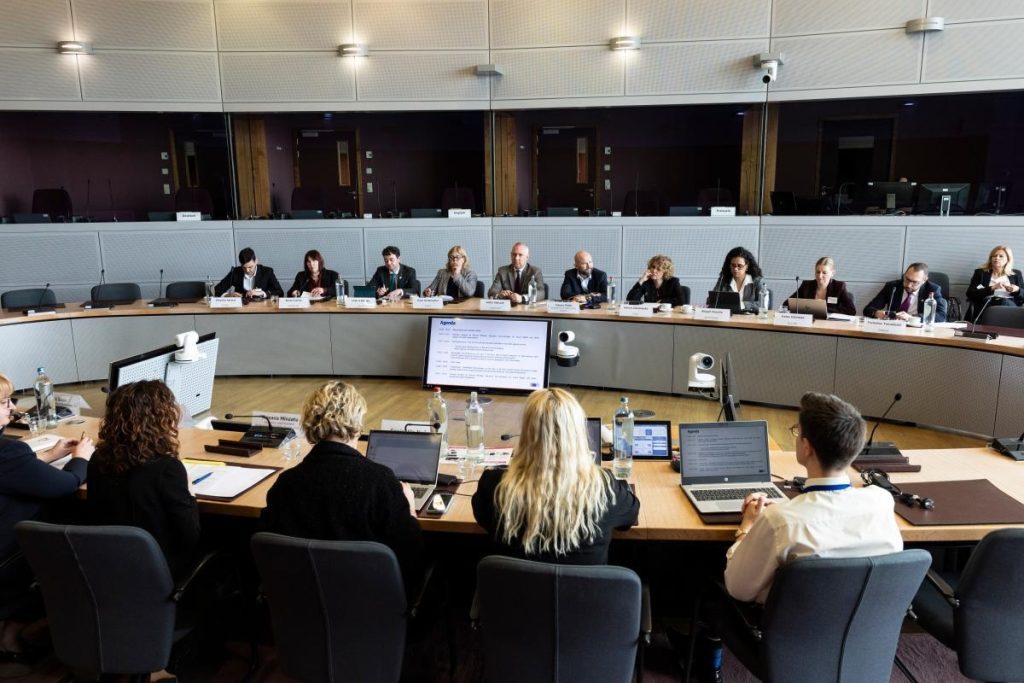
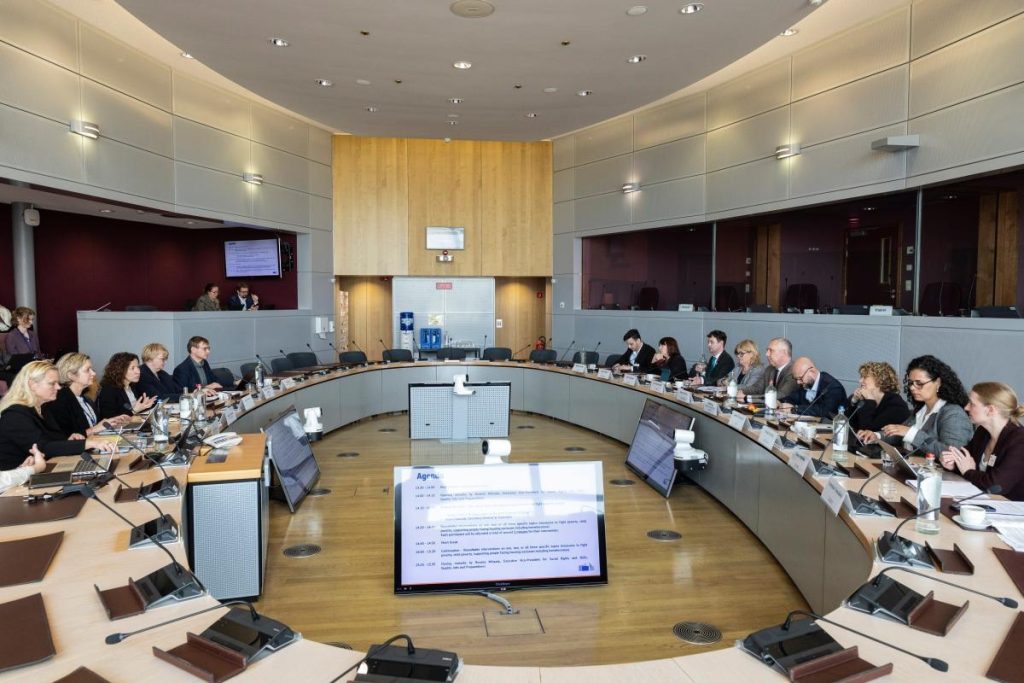
With the aim of shaping the upcoming European Strategy to Combat Poverty, the City of Athens participated in a special meeting organized by Eurocities on March 24 in Brussels, led by EU Executive Vice-President for Social Rights and Skills, Quality Jobs and Preparedness, Roxana Mînzatu.
Representing the Mayor of Athens, Haris Doukas, Develop Athens CEO Elissaios Sarmas presented the city’s innovative model for tackling energy poverty, highlighting the crucial role of cities in designing and implementing effective social policies.
Athens’ experience as a European example
At the center of the presentation was the Energy Poverty Alleviation Office (EPAO) of the City of Athens, which operates through Develop Athens as a comprehensive “one-stop shop” supporting energy-vulnerable households. As noted during the meeting, the City of Athens approaches energy poverty not only as an energy issue but as a broader social challenge requiring coordinated interventions at a local level.
Through the Office, vulnerable households receive support, including:
– Assessment of their energy needs
– Personalized counseling
– Active outreach to citizens
– Connection to innovative support measures.
These measures include exemptions from municipal fees – where eligibility criteria are met, and access to energy-efficiency equipment at special discounts or through sponsorships by private-sector companies.
So far, 1,000 households have been registered, more than 400 have received support through the Energy Benefit Card, and over 250 highly vulnerable households have been exempted from municipal fees.
Elissaios Sarmas, CEO of Develop Athens stated: “Athens’ experience shows that cities can play a decisive role in tackling poverty when policies are designed and implemented close to citizens. Through EPAO, we demonstrate in practice that integrated, local, and people-centered solutions can have an immediate and tangible impact on citizens’ daily lives. Our contribution to shaping the European strategy is an important step so that such solutions can be strengthened, expanded, and applied on a broader scale.”
From local implementation to European policy-making
Athens’ participation in the meeting was particularly significant, as it took place at a critical moment: the European Commission is preparing, for the first time, a comprehensive strategy to combat poverty, which is expected to significantly influence future European policies and funding schemes.
Athens’ experience was highlighted as a best practice that can be adopted by other European cities, contributing meaningfully to the development of policies that strengthen local intervention models, linking social cohesion with a fair energy transition, and promoting the transfer of know-how and successful practices.
Photos: European Commission