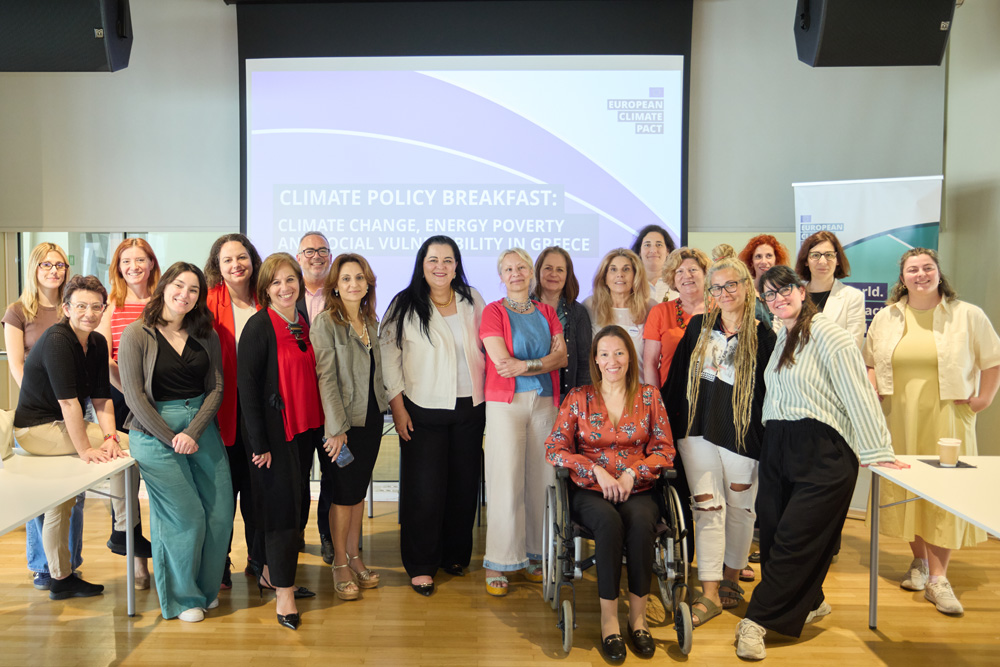
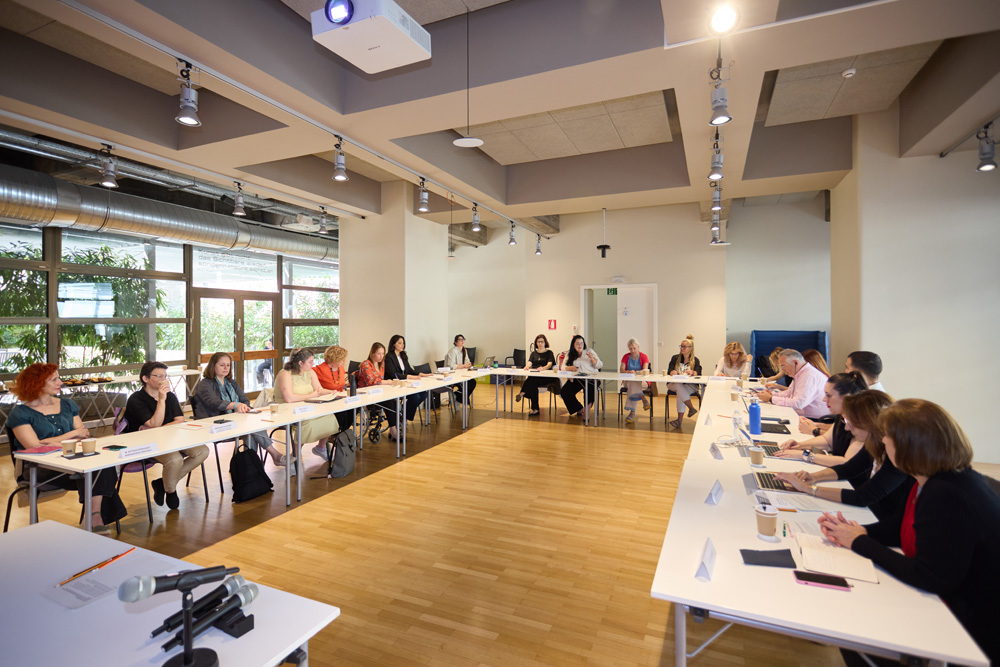
EPAO participated in the Climate Policy Breakfast on “Climate Change, Energy Poverty and Social Vulnerability in Greece”, organised by INZEB on 26 May at the Goethe-Institut Athens.

The event brought together partners of the European Climate Pact, representatives of public and social organisations, and research institutions. The discussion focused on the social dimensions of the climate transition in cities. Avgi Gonou, Sustainability & International Cooperation Advisor at EPAO, participated in the dialogue by sharing Athens’ experience and highlighting the challenges associated with addressing energy poverty in the city.
Among the key issues highlighted during the discussion were:
- Energy poverty is a multidimensional challenge shaped by social, economic, housing and environmental factors.
- Climate impacts and the costs of the transition are not distributed equally across society, affecting some groups and regions more than others.
- Cooling needs and summer energy poverty are becoming increasingly important as heatwaves intensify.
- Housing conditions play a central role in determining both vulnerability and the ability to benefit from the energy transition.
- Access to financing remains a significant barrier for many households.
- Local authorities are expected to play an increasingly important role, often while facing significant capacity and resource constraints.
- Better data, monitoring mechanisms and vulnerability mapping are essential for designing more targeted and effective policies.
Following the discussion, a report entitled “Mapping Challenges and Priorities of the Climate Transition: Climate Change, Energy Poverty and Social Vulnerability in Greece” was published and is available in Greek here.
* The action was implemented within the framework of the project “Operation of the Energy Crisis Response Mechanism in the Municipality of Athens” (MIS Code 6039174), which is co-financed by the Attica Regional Operational Programme 2021–2027 and the European Regional Development Fund.